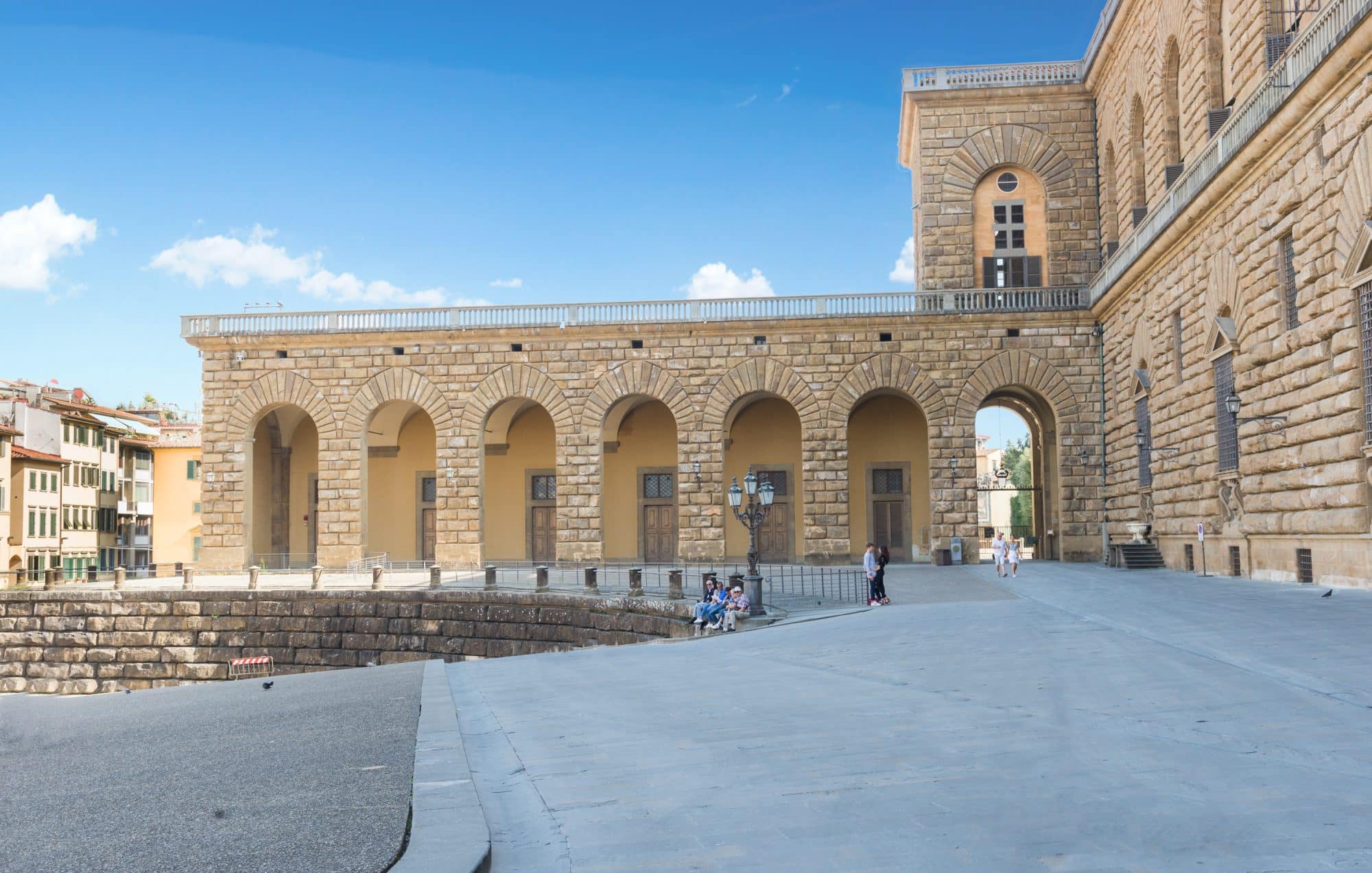
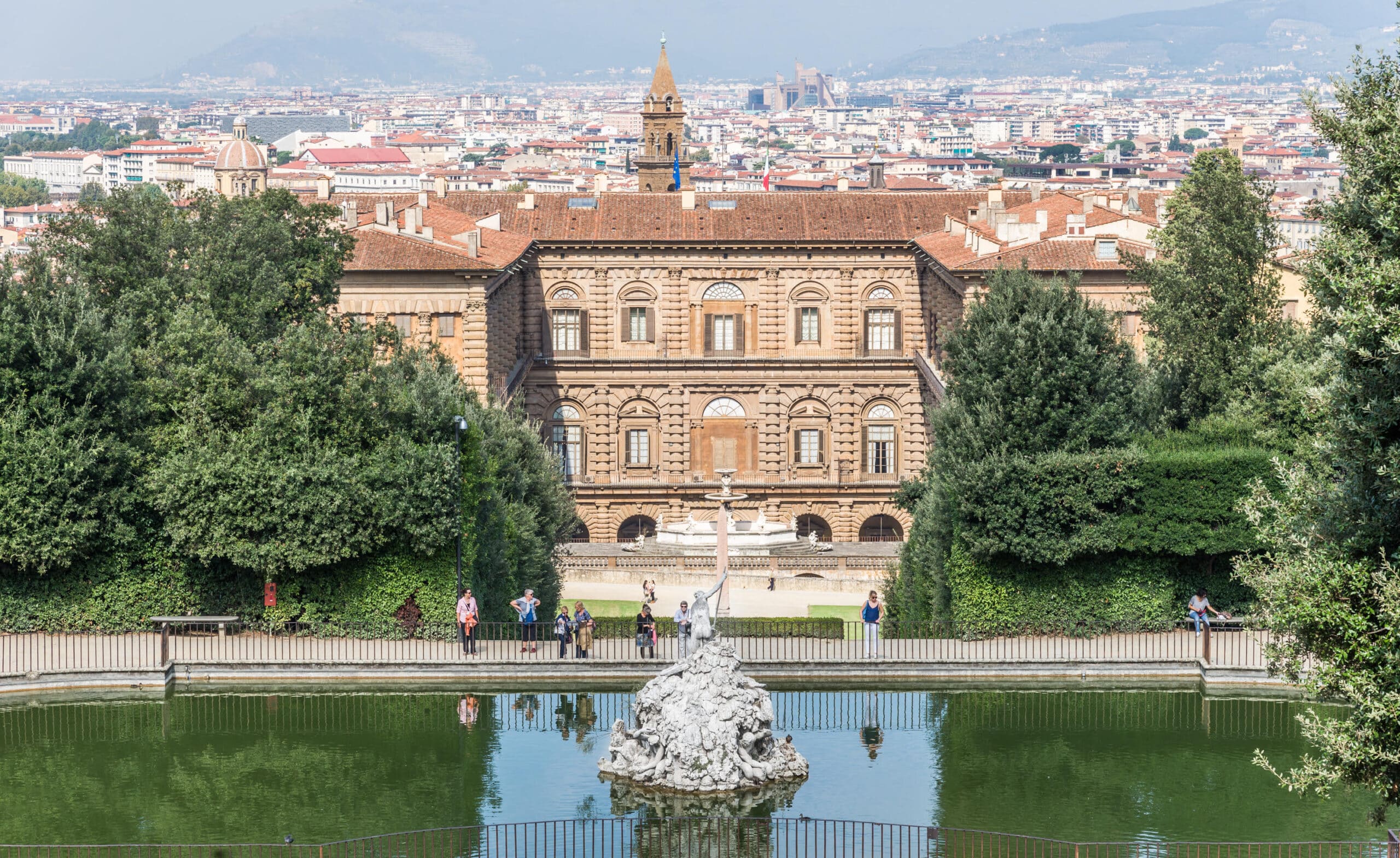
With the Pitti Palace Tour we go back in time and visit the fascinating residence of the Medici Grand Dukes on the left side of the Arno. Palazzo Pitti (often called Pitti Palace in English) is divided into the summer and the winter residence. It belonged to the Pitti family and was then bought by Grand Duchess Eleanor of Toledo, when the Pitti had already decayed. Today, the palace houses several museums. Our private Pitti Palace Tour includes the Renaissance paintings in the Palatine Gallery, the jewels and precious vases in the Treasure of the Medici, and a relaxing walk in the magnificent Boboli Gardens.
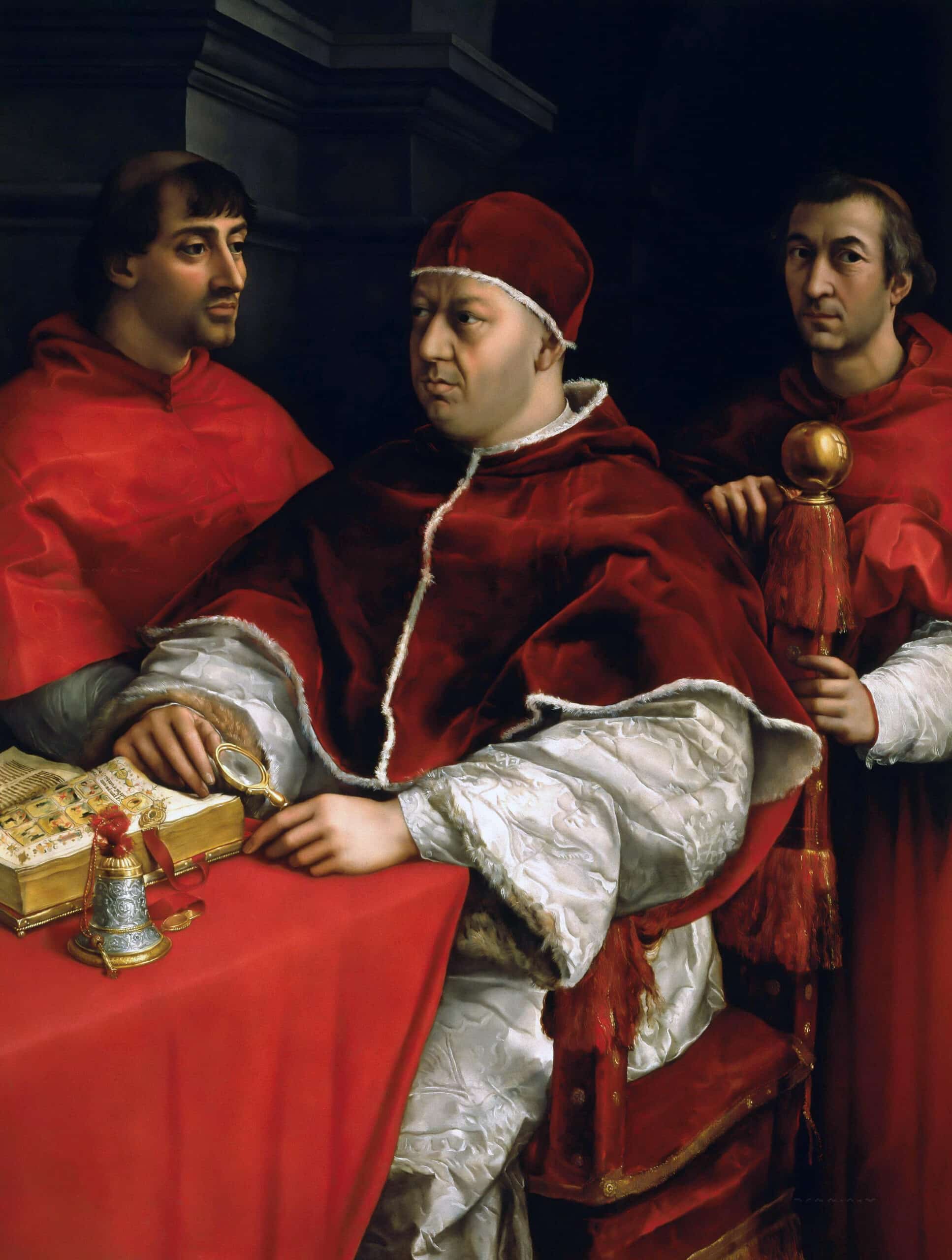
Let’s have first a historical introduction outside the palace and inside the courtyard to understand how was the court’s life at the time of the Medici. A tour of the Palatine Gallery is a must see. In Baroque style, the silk-covered walls display numerous famous paintings. Indeed, the gallery boasts many works by Raphael (such as the Madonna della Seggiola and the Velata), Titian, Caravaggio, Giorgione, and Botticelli. There are also many masterpieces by Flemish, French and English artists. Due to the quality and the fine decoration of the collection, the gallery has a particular sense of uniqueness and distinctiveness. The Palatine Gallery also houses the Royal Apartments, where the Savoia family lived when Florence was the Capital city. My favorite painting is undoubtedly the portrait of the court’s dwarf Morgante by Agnolo Bronzino.
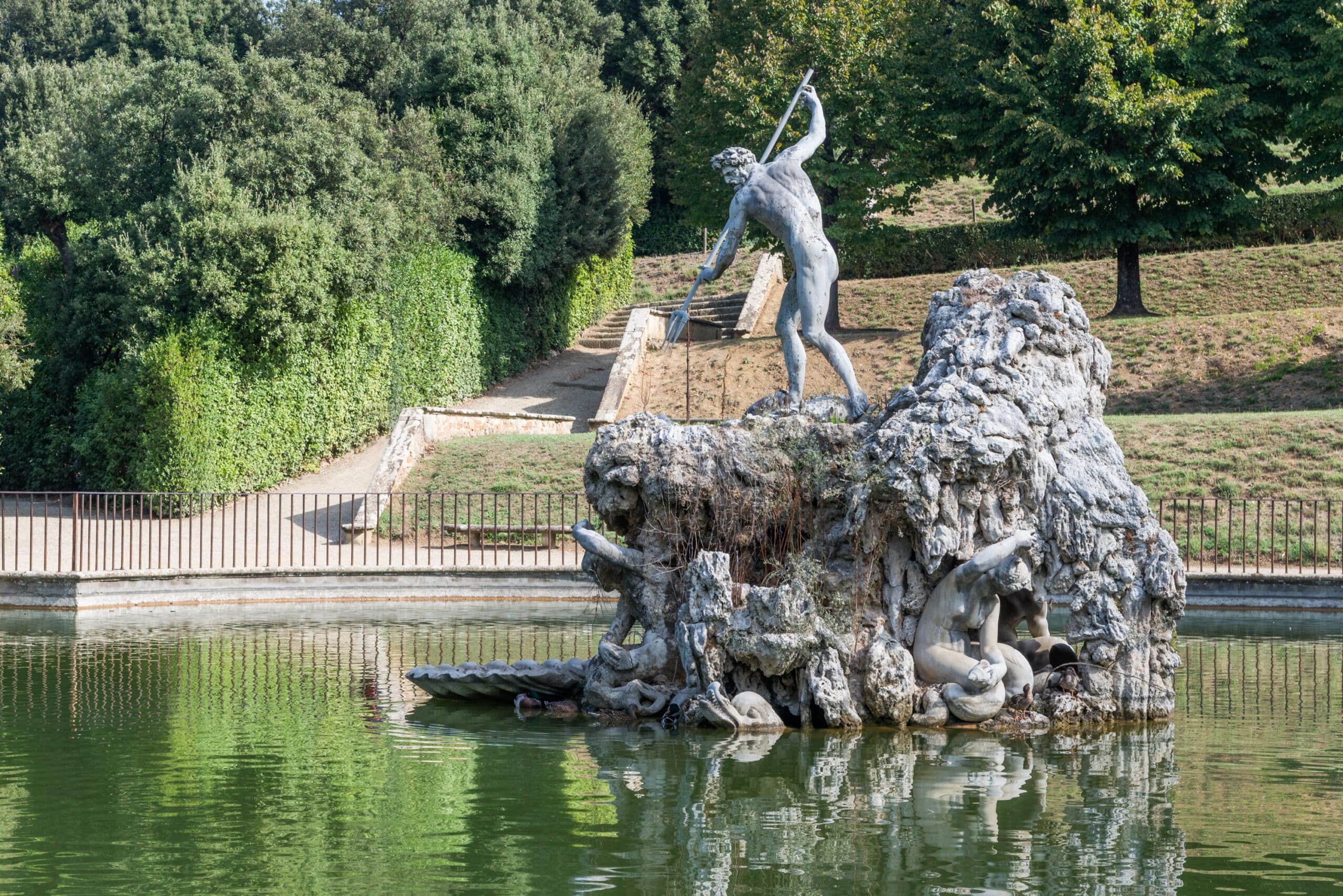
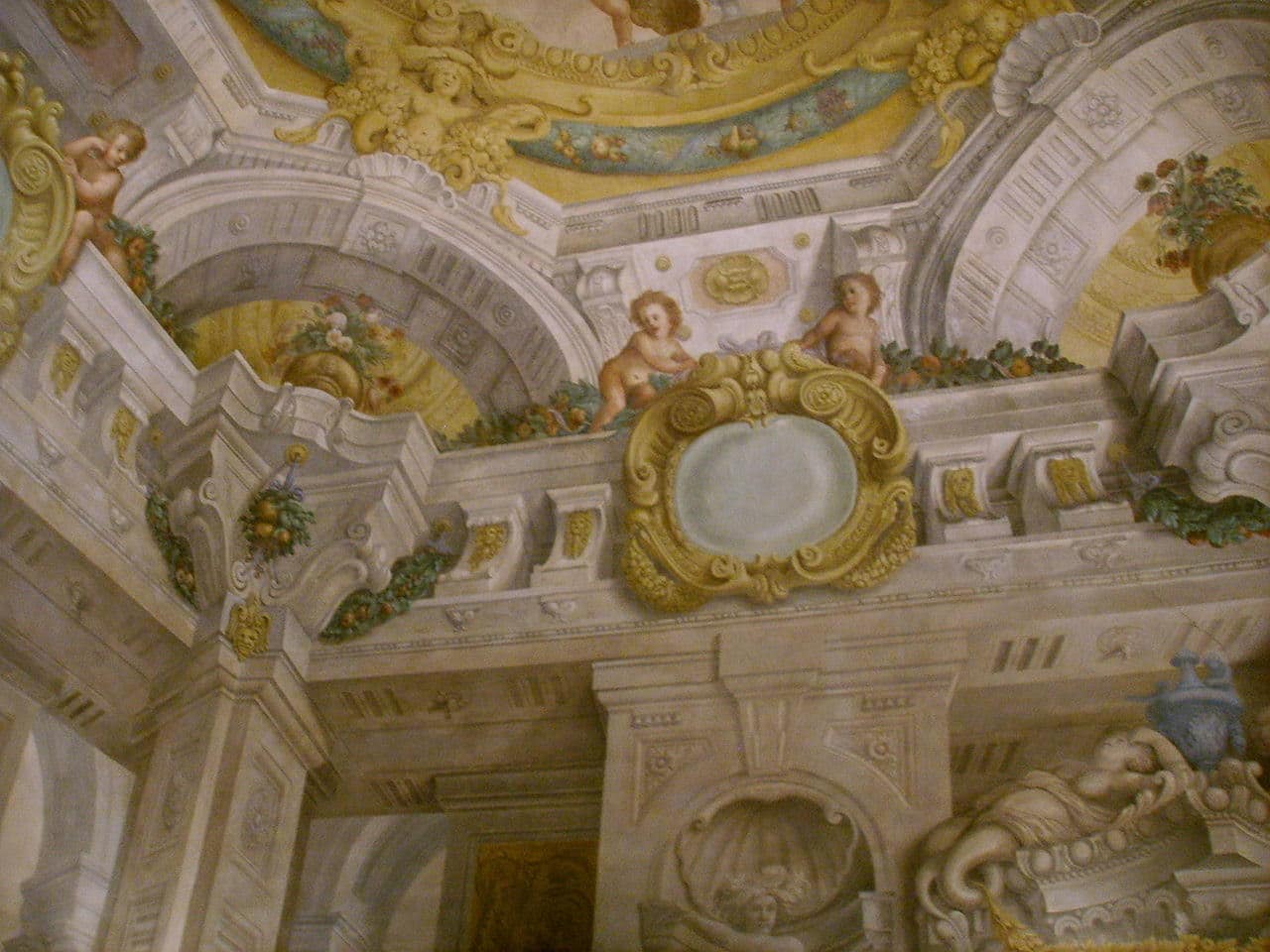
The Treasure of the Medici contains a collection of priceless silver jewels and works in semi-precious gemstones. Many of them are from the collection of Lorenzo il Magnifico, Lawrence the Magnificent, including his collection of ancient vases. The frescoes on the walls are really worth seeing! They date back to the 17th century and they are a great slice of life at the time of the Medici court. We conclude our visit with a tour of the Boboli Gardens. It’s among the first examples of an Italian garden. It was laid out by Niccolo’ Tribolo: mazes, fountains, an amphitheater, and the famous grotto by Buontalenti. Indeed, a fascinating walk for all!
What makes the Boboli Gardens special?
The Boboli Gardens are the blueprint for Italian-style gardens worldwide. Designed for the Medici court, they combine architecture, nature, and symbolism.
Highlights include:
It’s the perfect way to end the tour—peaceful, scenic, and far from the city crowds.
Is the Pitti Palace Tour suitable for experienced art collectors or culturally sophisticated travelers?
Absolutely. This experience is specifically designed for travelers who already appreciate art, history, and cultural depth. Your guide contextualizes each masterpiece—not just artistically, but politically and socially—so you gain insight into why these works mattered to the Medici court and how they shaped Western taste.
What is included in the Treasure of the Grand Dukes?
This hidden gem showcases the Medici’s extraordinary wealth and taste. You’ll see:
It’s a refined, less crowded space—ideal for travelers seeking exclusivity and rare objects rather than mainstream highlights.
Can I combine the Pitti Palace Tour with the Uffizi Gallery in one day?
While it is technically possible, I strongly advise against it—especially if you want a meaningful, high-quality experience. The Uffizi Gallery is an extensive and complex museum that easily requires several hours to fully appreciate. On top of that, Palazzo Pitti is significantly larger, making the combination in a single day quite overwhelming, even for experienced travelers. For a more refined and enjoyable experience, I highly recommend purchasing a combined ticket and visiting the two museums on separate days. This allows you to fully immerse yourself in each collection without feeling rushed or fatigued. Think of it not as seeing more—but as experiencing better.
Do you recommend visiting the Fashion and Costume Museum inside Palazzo Pitti with a private guide?
Absolutely—this is an excellent and highly curated alternative. As of April 2026, the Treasure of the Grand Dukes is temporarily closed to the public. For this reason, I offer my clients a refined substitute: the Fashion and Costume Museum, one of Florence’s most underrated cultural experiences.
This private guided visit becomes a journey across:
You’ll explore extraordinary garments spanning from the late 18th-century ancien régime to contemporary haute couture, featuring iconic designers such as:
More than a museum visit, this is a sensory experience—where craftsmanship, identity, and beauty come together in a deeply engaging and elegant narrative. For travelers who appreciate style, heritage, and exclusivity, this is an unmissable addition to your Florence itinerary.